Cata Fernández died at 25 of a medulloblastoma: what this brain tumor is and why her first sign was a headache during exertion
The Colombian actress and content creator died on November 12 after more than three years of treatment. Her case put the spotlight on medulloblastoma, a malignant tumor of the cerebellum that is more common in children but also occurs in young adults.
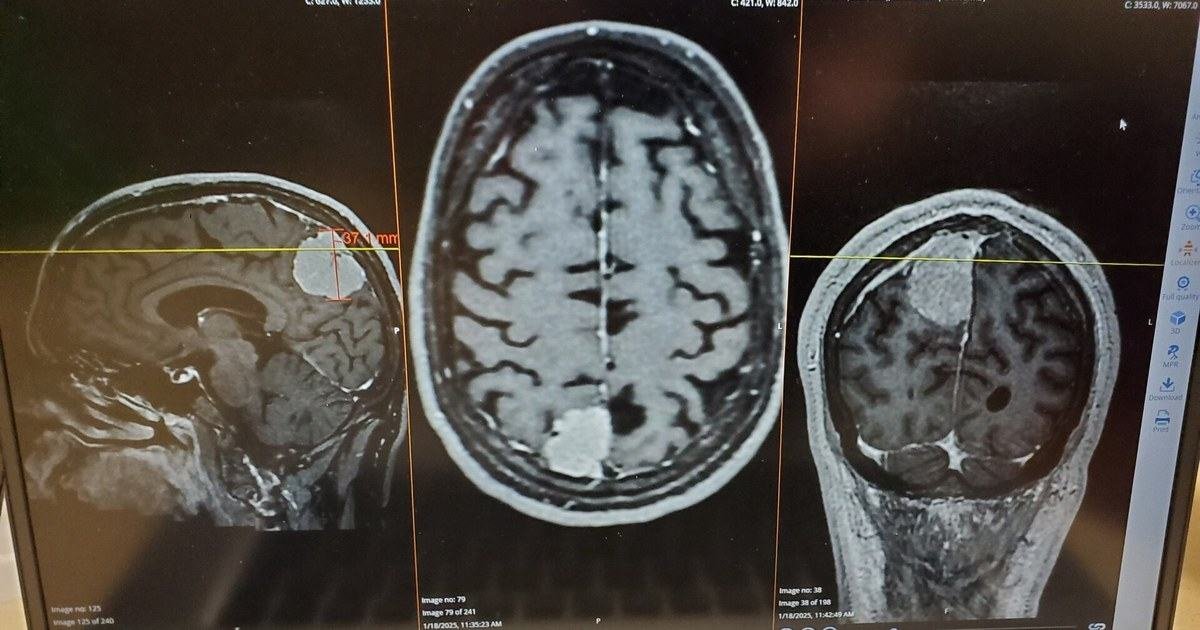
Photo: JayCubby / Wikimedia Commons · CC BY-SA 4.0
MRI images of a brain tumor; they do not belong to the patient in this story. File photo: JayCubby / Wikimedia Commons (CC BY-SA 4.0).
Colombian actress and content creator Catalina Fernández Gómez, known as Cata Amatista, died on November 12 at age 25, after more than three years with brain cancer, El Tiempo reported. Her family confirmed it on social media: "Cancer was not her whole story. Her story was love."
Her first sign was a headache.
How it all began
According to El Tiempo, in March 2023 Catalina, then 21, began having headaches during physical exertion. She had no other symptoms, but her mother, a physical therapist, felt she should see a specialist. A neurologist ordered an MRI, which showed a tumor of about four centimeters near the cerebellum.
She had surgery a few days later. Pathology confirmed a cerebellar medulloblastoma. The tumor came back and required a second surgery in June 2024, followed by chemotherapy and radiation. In 2025 doctors found lesions in the lower spine and later in the membranes that cover the nervous system. She shared the whole process with her followers.
What medulloblastoma is
The U.S. National Cancer Institute (NCI) explains that medulloblastoma is a primary tumor of the central nervous system that usually forms in the cerebellum, the lower back part of the brain that controls balance and coordination. All are classified as grade IV: they are malignant and grow fast.
It is more common in children, but in adults it usually appears between ages 20 and 40, according to the NCI. The causes of adult cases are unknown. It tends to spread to other parts of the nervous system through the cerebrospinal fluid.
Warning signs
According to the NCI, symptoms depend on where the tumor is:
- Problems with walking, balance or fine motor skills.
- If it blocks the cerebrospinal fluid and pressure inside the skull rises: headaches, nausea, vomiting, blurred or double vision, extreme sleepiness, confusion or seizures.
Treatment usually starts with surgery and continues with radiation and chemotherapy or clinical trials.
The vast majority of headaches are not caused by a tumor. But a new, persistent headache that comes on with exertion or is accompanied by vomiting, dizziness, trouble walking or vision changes deserves an evaluation. Talk to your doctor.
Read also: Toukie Smith y la esclerosis múltiple: señales de alerta · Jesús de Miguel y la commotio cordis: qué es
Sources
For information only. It does not replace advice from a health professional. Medical disclaimer