Breaking: the head clash that sent Adonai Valdez off on a stretcher at the U-17 World Cup, and what to do after a blow to the head
The Mexican defender collided with teammate Da'vian Kimbrough in the match against Venezuela and lay motionless on the pitch. The team said he is stable and conscious and was taken to a hospital.
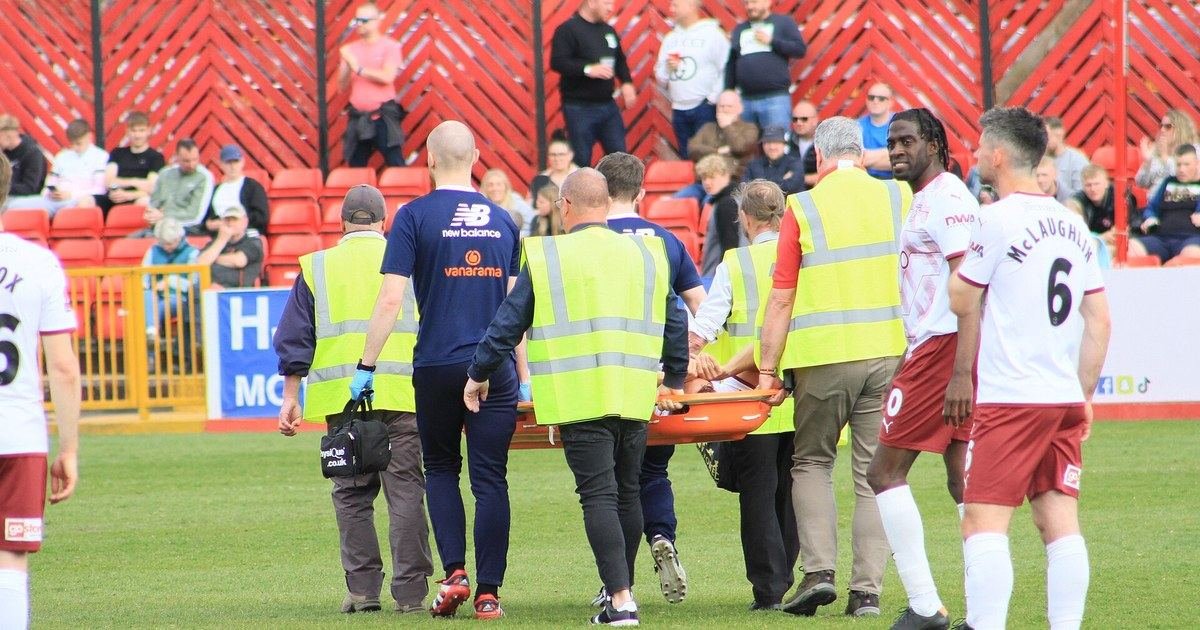
Photo: Bill Wheatcroft / Wikimedia Commons · CC BY 2.0
A footballer is carried off the pitch on a stretcher during a match in England (a different case). Reference photo: Bill Wheatcroft / Wikimedia Commons (CC BY 2.0).
It was the 15th minute of Mexico vs. Venezuela, the third group-stage match of the U-17 World Cup in Qatar, when Mexican defender Adonai Valdez went to clear a ball inside his own box and clashed heads with his teammate Da'vian Kimbrough.
Valdez lay on the grass without reacting, according to El Universal's match report. The referee stopped play so the medical staff could come on, and the player left the field on a stretcher. He was replaced by Alan Hernández.
What the team said
Minutes later, Mexico's national team said on social media that Valdez was stable and conscious after the blow to the head, which triggered the concussion protocol, and that he would be taken to a hospital for further care. At the time of publication, no diagnosis had been released.
Mexico secured first place in its group and advanced unbeaten to the next round, but on social media the most talked-about moment was the collision, which fans described as a "dramatic image."
What a concussion is
A concussion is a brain injury caused by a blow or a hard jolt to the head. According to the U.S. CDC, there is not always a loss of consciousness, and symptoms can appear hours later. That is why, when in doubt, an athlete should not return to play that day: a second blow before recovering can be very dangerous, especially in children and teenagers.
Common signs, according to the CDC and MedlinePlus:
- Headache, dizziness or nausea.
- Confusion, slow responses or not remembering what happened.
- Bothered by light or noise, blurred vision.
- Mood changes or drowsiness.
When to go to the emergency room right away
Seek urgent care if the person passes out even briefly, if one pupil looks larger than the other, if they cannot be woken up, if the headache gets worse, if they vomit repeatedly, have a seizure or slur their words. Do not give them aspirin or leave them alone in the first hours.
If your child took a blow to the head while playing, even if they "seem fine," see your doctor before they return to training.
Read also: Vincent Kompany se desplomó en un entrenamiento: qué hacer ante un desmayo
Sources
- El Universal: Jugador de México cae noqueado tras fuerte choque con un compañero en el Mundial Sub 17 (27 nov 2026)
- Excélsior: Adonai Valdez sale en camilla tras fuerte choque en el México vs Venezuela (27 nov 2026)
- CDC: HEADS UP, conmociones cerebrales en el deporte
- MedlinePlus: Conmoción cerebral en adultos
For information only. It does not replace advice from a health professional. Medical disclaimer