Type 2 diabetes is linked to a 53% higher risk of Alzheimer’s, according to a review of 40 studies
Researchers at Curtin University (Australia) pooled 40 studies and found that people with type 2 diabetes have a 53% higher relative risk of Alzheimer’s. It does not prove that one causes the other.
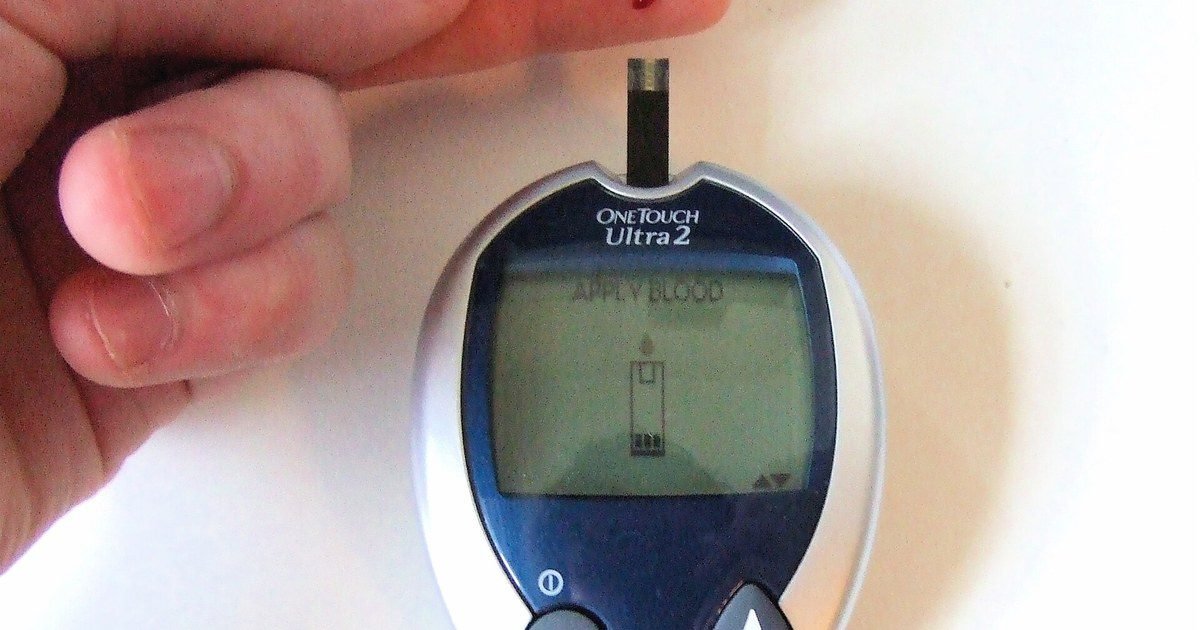
Photo: David-i98 / Wikimedia Commons · CC BY-SA 3.0
A person checks their blood glucose with a meter. Reference photo: David-i98 / Wikimedia Commons (CC BY-SA 3.0).
People with type 2 diabetes have a 53% higher relative risk of Alzheimer’s disease than people without it. That is the conclusion of a systematic review and meta-analysis of 40 observational studies led by researchers at Curtin University in Australia and published in the journal Alzheimer’s Research & Therapy.
Taken together, the studies add up to more than 27 million data points, and the review focused only on studies with well-defined diagnoses of type 2 diabetes and Alzheimer’s, something earlier reviews did not always do.
What they found
Besides the higher relative risk (aRR 1.53), the authors estimated how many new cases appear: about 4.7 Alzheimer’s diagnoses per 1,000 people with type 2 diabetes followed for one year. That figure varied widely between studies, from less than one case to almost 30 per 1,000, depending on how the diagnosis was recorded and which population was studied.
In the analysis by sex, incidence was somewhat higher in women than in men, while the relative increase in risk was similar in both.
What it does not mean
A 53% higher risk does not mean that 53% of people with diabetes will develop Alzheimer’s. It is a relative increase compared with people without diabetes.
These are also observational studies: they show an association and do not prove that diabetes causes Alzheimer’s. According to Infobae, lead author Emmanuel Adewuyi stressed that the results apply to populations, do not predict what will happen to any one person and do not justify changing medication or aiming for stricter glucose targets solely to prevent dementia.
The authors conclude that it makes sense to build the prevention of cognitive decline into diabetes care.
What you can do
If you have type 2 diabetes, keep up the treatment and check-ups your health team recommended. Looking after your blood pressure, staying active, not smoking and sleeping well protect both the heart and the brain. If you notice frequent forgetfulness or changes in memory, mention it at your next appointment. Talk to your doctor before changing any medication.
Read also: Diabetes tipo 2 en jóvenes: la remisión en la mitad · La memoria de las nuevas generaciones mayores
Sources
- Alzheimer’s Research & Therapy: Incidence and risk of Alzheimer’s disease in individuals with type 2 diabetes: a systematic review and meta-analysis (9 nov 2026)
- ScienceDaily / Curtin University: Type 2 diabetes linked to 53% higher Alzheimer’s risk (22 nov 2026)
- Infobae: La diabetes tipo 2 se asocia con un 53 % más de riesgo de Alzheimer (25 nov 2026)
For information only. It does not replace advice from a health professional. Medical disclaimer