Flu is rising in the US ahead of Thanksgiving: seven children have died so far this season, and what the CDC recommends
The CDC's latest FluView report shows 11.8% of samples tested positive for influenza and that an H1N1 variant dominates. Severity, for now, is low.
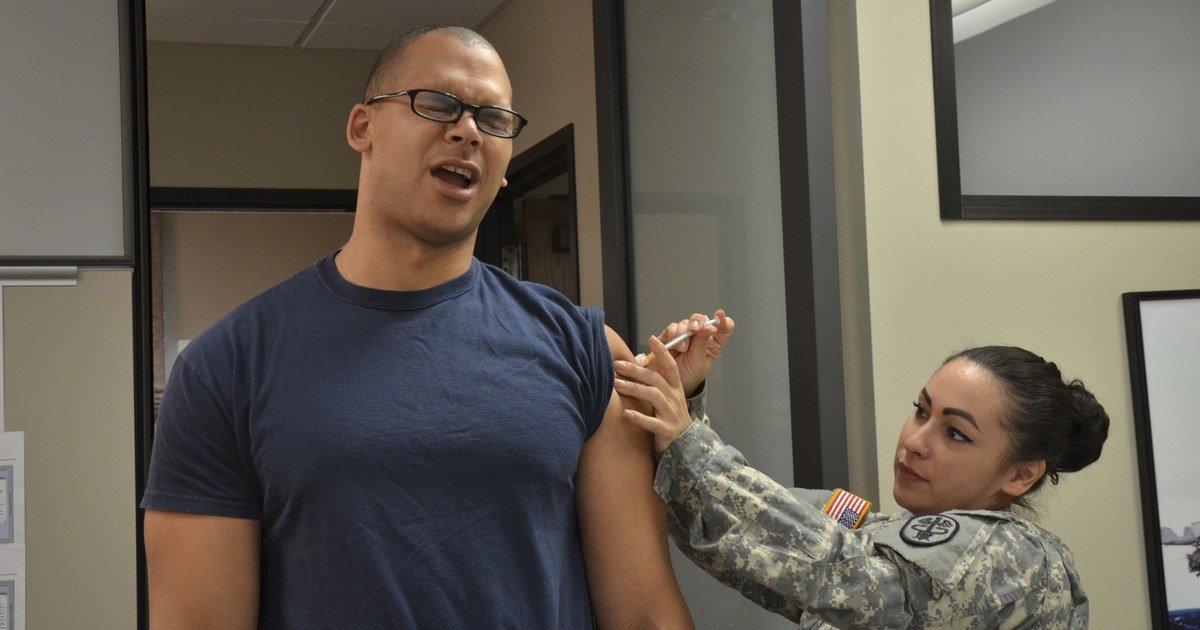
Photo: Wikimedia Commons · Public domain
A service member receives a flu shot. Reference photo: Petty Officer 1st Class Jacquelyn Childs / Wikimedia Commons (Public domain).
Flu is climbing in the United States just before Thanksgiving. The latest weekly FluView report from the Centers for Disease Control and Prevention (CDC), with data through 14 November, says several indicators “continue to increase nationally” and that many are higher than usual for this time of year.
The CDC estimates at least 3.7 million illnesses, 50,000 hospitalisations and 2,800 deaths from flu so far this season.
Key figures
- 11.8% of samples tested by clinical labs were positive for influenza (up from 11.3% the week before and 9.1% two weeks earlier, according to NBC Chicago).
- Two more child deaths were reported: seven children have died this season.
- Almost all viruses are type A, and 96.4% of those subtyped were A(H1N1)pdm09, mostly of the subclade now called E.
- CDC forecasts point to more flu hospitalisations and emergency visits for the week ending 5 December.
Is this a worse season?
Not so far. The CDC rates severity as low across all ages and says an earlier start “does not necessarily” mean a higher peak. It also notes that almost all viruses tested resemble those in this season's vaccine, although it is too early to know how effective it will be.
Because of the holiday, the next FluView will be published on 30 November.
What the CDC recommends
The annual flu vaccine is recommended for everyone 6 months and older, and it is not too late while the virus is circulating. Before family gatherings: wash your hands, cover your cough and stay home if you have a fever. If you are in a high-risk group (over 65, pregnant, young children or people with chronic conditions) and develop symptoms, talk to your doctor promptly.
Read also: El sarampión en EE. UU. supera los 5.800 casos · La variante PJ.2.1 del covid en Argentina
Sources
For information only. It does not replace advice from a health professional. Medical disclaimer