More than 100 premature babies are born every day in Argentina: what to know on World Prematurity Day
A document from the Argentine Society of Pediatrics links prematurity to almost two in three deaths of babies under one year old in 2024. WHO estimates that more than 1 in 10 babies worldwide are born too soon.
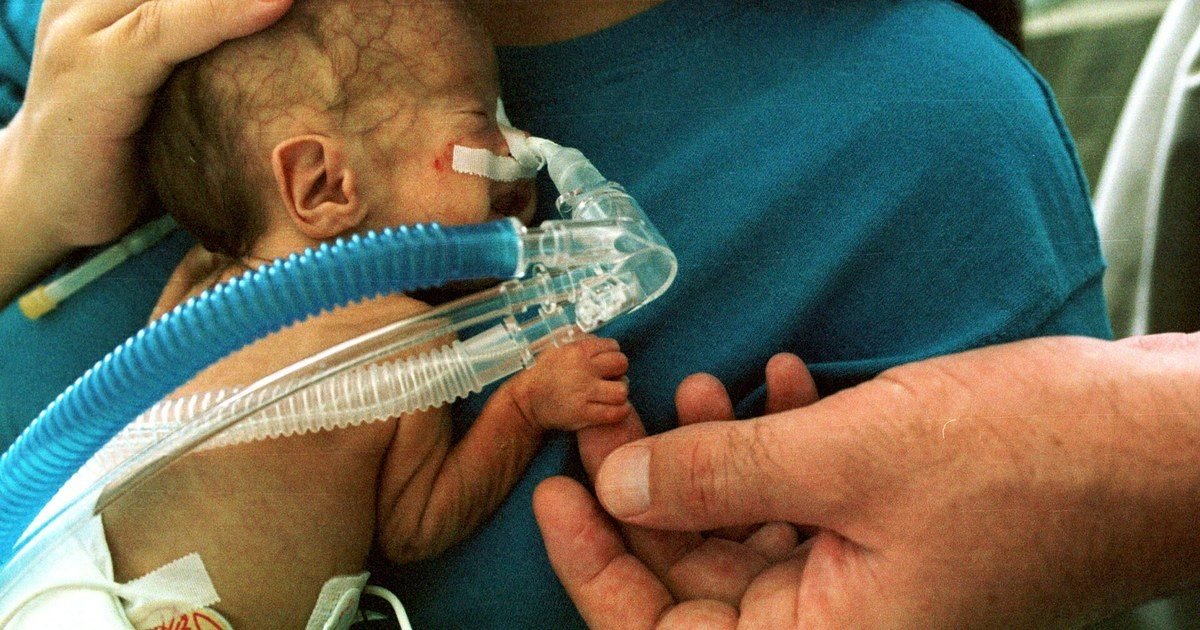
Photo: Wikimedia Commons · Public domain
A premature baby receives breathing support in a neonatal unit. Reference photo: Brian Hall / Wikimedia Commons (Public domain).
More than 100 premature babies are born every day in Argentina. The figure comes from a document by the Argentine Society of Pediatrics (SAP) and its Fetal-Neonatal Studies Committee (CEFEN), released this week, Infobae reported on Monday, November 16.
November 17 is World Prematurity Day.
The hardest figure
According to the SAP document cited by Infobae, 63.9% of the roughly 3,500 deaths of children under one recorded in Argentina in 2024 were related to premature babies.
A baby is considered premature when born before week 37 of pregnancy. The smallest can weigh just 300 to 600 grams and need special care from the first minute, in neonatal intensive care units where they stay until they are ready to go home.
Infobae's column also stresses that the SAP now encourages families to be inside those units, and that follow-up should continue throughout the first year, with checks on motor and cognitive development.
A global problem
The World Health Organization (WHO) estimates that 13.4 million babies were born preterm in 2020, more than 1 in 10 births. In 2019, about 900,000 children died from complications of preterm birth, and prematurity is the leading cause of death in children under five.
The gaps between countries are huge: according to WHO, in low-income settings half of babies born at or before 32 weeks die for lack of basic care.
What does help
WHO highlights simple, life-saving interventions such as kangaroo mother care (skin-to-skin contact) right after birth, early breastfeeding and CPAP breathing support when needed.
The obstetricians quoted in Infobae's column insist on not postponing prenatal check-ups. If you are pregnant or planning to be, talk to your doctor about your check-ups and warning signs.
Read also: Día Mundial de la Diabetes: 4 de cada 10 no saben que la tienen · Qué es el meduloblastoma y sus señales
Sources
For information only. It does not replace advice from a health professional. Medical disclaimer