Do you see faces in outlets, clouds and toast? You're not imagining things: it's called pareidolia, and your brain does it on purpose
A house that looks surprised, a frightened power outlet, a saint's face on a slice of toast. Photos of "objects with faces" are huge on social media, and neuroscience explains why our brains can't help it.
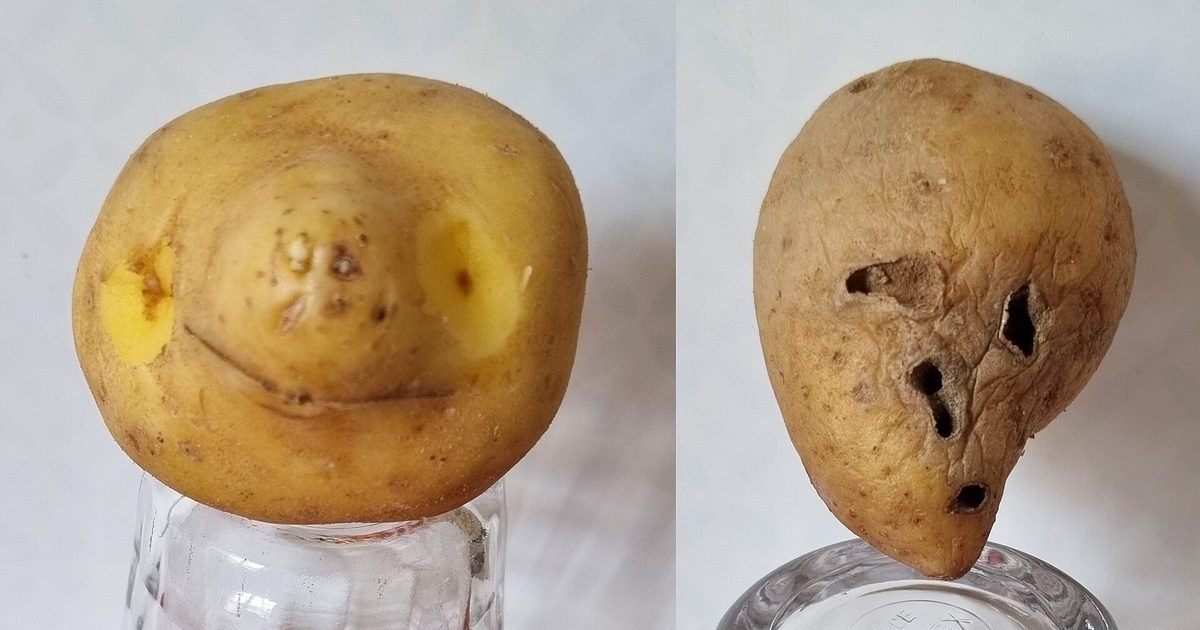
Photo: Pierrecolantidot / Wikimedia Commons · CC BY 4.0
There are entire online communities devoted to it, with millions of followers: photos of objects that seem to "look back at us". A faucet with a shocked expression, a handbag that looks angry, a smiling bell pepper, a house whose two windows and door form an astonished face. If you can't help laughing when you see them, congratulations: your brain is working perfectly. The phenomenon has a name: face pareidolia.
What pareidolia is
The word comes from the Greek para (beside, beyond) and eidolon (image). It's the tendency to perceive a meaningful pattern, especially a face, in things that don't contain one: stains, clouds, rocks, power outlets or the foam on your coffee. There's also auditory pareidolia, like thinking you hear words in the hum of a fan or in a song played backwards.
Why the brain does it
Humans are deeply social animals. Recognizing faces quickly — and telling whether they're friendly, hostile or scared — was key to survival. That's why the brain has specialized regions such as the fusiform face area, which light up as soon as they detect the basic "two eyes and a mouth" arrangement.
Evolution favored an "oversensitive" detector: missing a real face (a hidden predator or enemy) is far more costly than mistakenly seeing a face in a bush. That harmless mistake is exactly what pareidolia is.
Brain-imaging studies have shown that when we look at an object with a "face", the fusiform face area activates within a few tenths of a second, almost as fast as it does for a real face. In other words, the brain registers "face" first and only afterwards realizes it's an outlet.
What scientists have found
- They have emotions: in a University of Sydney study, participants didn't just see faces in objects; they assigned them specific expressions (happy, surprised, angry) with striking agreement between people.
- They tend to look male: a study published in PNAS in 2023 found that most people perceive object faces as male, even though they have no gendered features. The authors think it may reflect a bias in how we interpret low-detail faces.
- Monkeys see them too: experiments with rhesus macaques showed they look longer at objects with "faces" than at similar objects without them, suggesting the phenomenon is old in primate evolution.
- Babies react early: from a very young age, babies pay more attention to face-like patterns.
Pareidolia through history
Many cultures have seen figures in nature: the "rabbit in the Moon" in Asia and Mesoamerica, the "man in the Moon" in Europe, or animals and gods in the constellations. In 1976, a photo from the Viking 1 probe showed a mesa on Mars that looked like a human face; for years people talked about a "face on Mars" built by aliens, until higher-resolution images taken in 1998 and 2001 showed it was simply an eroded hill.
It also explains why stains on walls or food that resemble religious figures go viral from time to time, and why some people are spooked by "faces" in photos of abandoned places.
Does seeing lots of faces say something about you?
Some research suggests that more creative people, or those inclined to believe in the supernatural, notice pareidolia more easily. Mood plays a role too: when we're anxious or afraid, the brain is more alert to possible faces, which is why a shape in a dark bedroom can look like a person at night. In the vast majority of cases, though, it's completely normal.
Only in very specific contexts, such as certain neurological conditions, can visual hallucinations of faces be a symptom worth discussing with a doctor, particularly if they appear suddenly and often.
How to have fun with it
Designers use pareidolia all the time: cars have "faces" made of headlights and grilles, and many brands take advantage of the effect to make products feel friendlier. It's also a great game with kids: going outside to "hunt for faces" encourages observation and creativity.
Next time a lamp seems to be giving you a suspicious look, remember it's your brain doing what it does best: searching for other humans, even where there are none. And if you feel like it, snap the photo and share it: someone else is bound to see the face too.
For information only. It does not replace advice from a health professional. Medical disclaimer
You may also like
 Animals
It looks AI-generated, but it's real: the red-lipped batfish of the Galápagos
 Health
Do you always wake up at 3 a.m.? What might be going on and how to get back to sleep
 Viral world
The Panama earthquake video watched by 23 million people: what to do if a quake catches you on a mountain, at home or on the street
 Relationships
The wedding vows that moved 8.8 million people, and what science says about couples who last
 Viral world
From Bulin 47's freestyle to AI montages: 9 clues to tell whether a viral video is real
 Animals