“Butterfly skin”: a two-year-old girl waited three months for her ID card because her condition can leave her fingerprints incomplete
Her family moved back from Spain to Córdoba, Argentina, for support. Each wound dressing costs about 300,000 pesos in supplies, and without an ID she could not join her father's health plan. The paperwork only moved after her mother spoke out on social media.
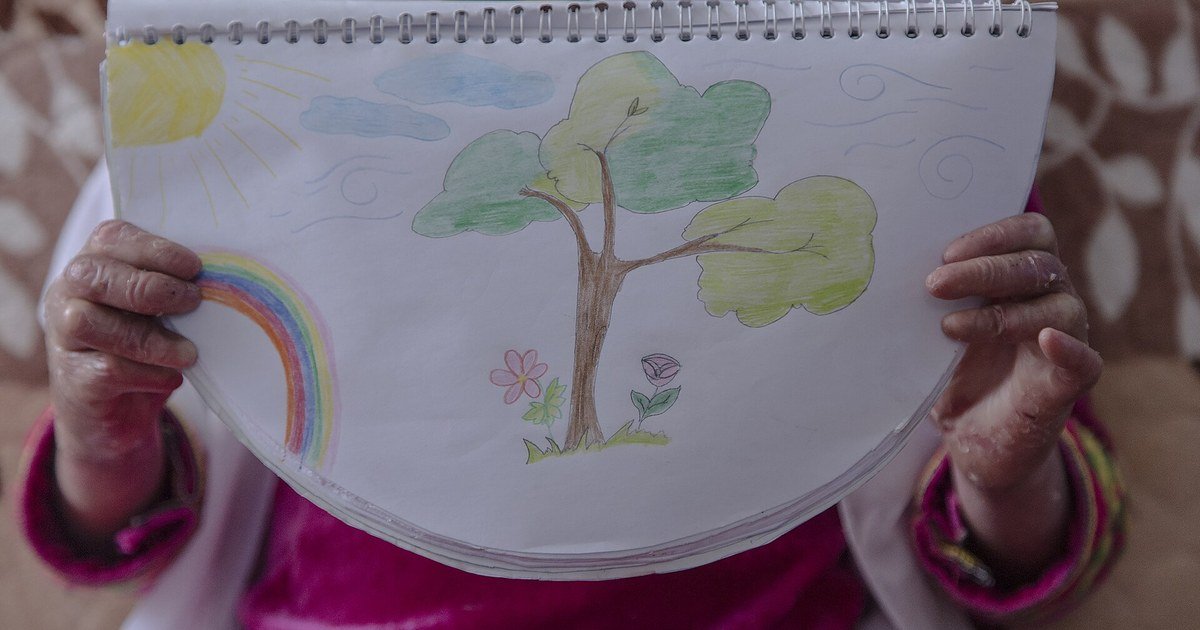
Photo: Wikimedia Commons · CC0
A girl with epidermolysis bullosa holds a drawing in Iran; she is not the girl in this story. Reference photo: Mostafameraji / Wikimedia Commons (CC0).
In Córdoba, Argentina, a two-year-old girl with epidermolysis bullosa, the condition many people call “butterfly skin”, waited three months for her national ID card. Her mother, Oriana, told Infobae on Tuesday, November 17, that the application was left “under review” because of a problem with her fingerprints.
“Some patients don't have complete fingerprints,” she explained.
Wound care every two days
The family returned to Argentina after almost eight years in Spain to be close to relatives. The girl is treated at a public hospital, but the family pays for the supplies for her wounds: “Each dressing costs roughly 300,000 pesos,” her mother said. She needs wound care every two days.
Without an ID card she could not be added to the health plan her father gets through his job. One private insurer, citing the pre-existing condition, quoted a fee of 2 million pesos a month, she said.
The application at RENAPER, the national registry, began in August with a promise of 20 days. The family submitted a Spanish medical certificate of the diagnosis. Three months later they were told one of the documents was hard to read. After she shared the case on social media, the agency called her, and on Tuesday she was told the ID card was on its way. “It makes me very sad that I had to expose myself like this to get it,” she said.
What epidermolysis bullosa is
According to MedlinePlus, from the U.S. National Library of Medicine, epidermolysis bullosa is a group of disorders in which skin blisters form after a minor injury, and it is passed down in families. Most types start at birth or shortly after.
Severity varies widely: from mild forms with skin blisters to severe forms that affect other organs, with blisters in the mouth or throat that make eating and swallowing hard. Treatment aims to prevent new blisters and avoid complications such as infections, with constant wound care. That is why steady access to supplies matters so much for these families.
If a baby or child gets blisters from minimal rubbing, talk to your doctor or a dermatologist for a diagnosis.
Read also: Síndrome de Sanfilippo: la demencia infantil · Más de 100 bebés prematuros al día en Argentina
Sources
For information only. It does not replace advice from a health professional. Medical disclaimer