One in five cancers carries changes that approved drugs could already target, a study of 17,000 tumours finds
University of Cambridge researchers analysed the whole genomes of 17,029 tumours. More than half of the targetable changes appeared in cancers for which the matching drug is not approved.
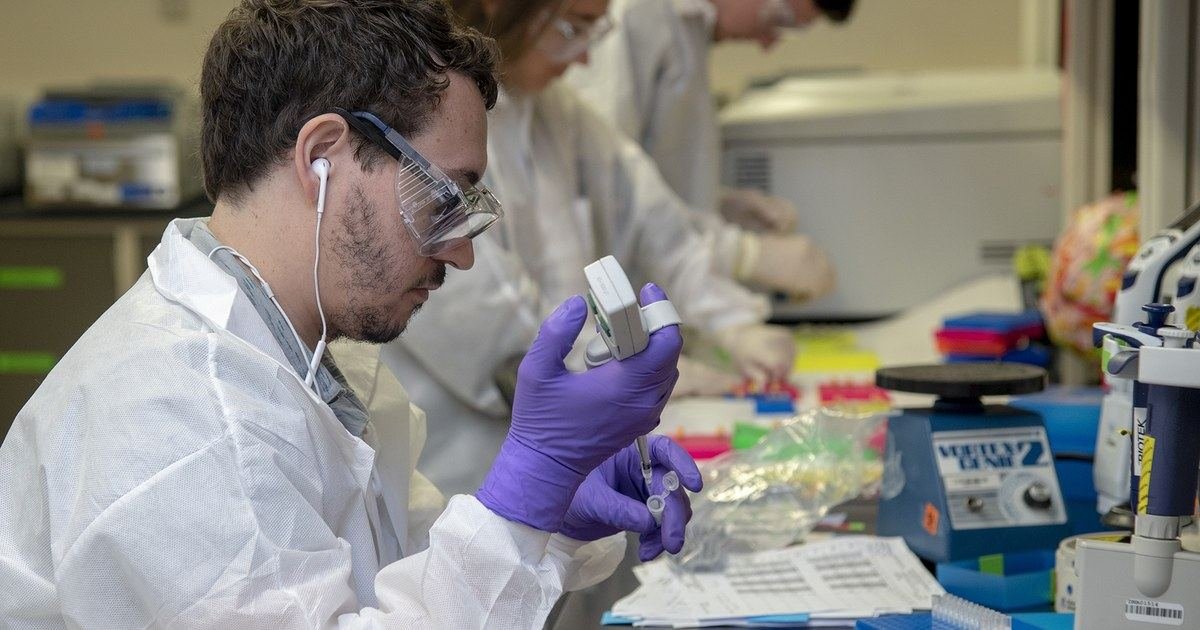
Photo: Wikimedia Commons · Public domain
Analysts work with DNA samples in a laboratory. Reference photo: Air Force Staff Sgt. Nicole Leidholm, photographer / Wikimedia Commons (Public domain).
A team at the University of Cambridge (UK) analysed the whole genomes of 17,029 solid tumours and found that about one in five primary cancers (18.9%) and one in four metastatic cancers (25.9%) carry DNA changes for which a targeted therapy is already approved by the US FDA in at least one cancer type.
The catch: more than half of those changes appeared in cancer types for which the drug is not authorised.
What the study found
The work, published in The Lancet Oncology, used data from 11,013 primary tumours in the UK's 100,000 Genomes Project and 6,016 metastatic tumours from the Hartwig Medical Foundation in the Netherlands.
Of the 5,706 “immediately actionable” changes identified, 2,914 (51.1%) were in tumours where the biomarker is not FDA-approved. Changes such as HER2 amplification, RAS-RAF pathway alterations, IDH1 mutations and DNA-repair defects showed up across many different organs.
“The scale of potentially missed opportunities is striking,” said Professor Serena Nik-Zainal, the senior author, in the university's press release. “We have approved drugs that we know can target particular genetic mutations, but if these mutations occur in the wrong type of cancer, we can't use them.”
What it does not mean
The authors stress that not every patient could benefit right away: a targetable change does not guarantee that a drug will work in another organ. The study is retrospective and calls for clinical trials to test effectiveness, safety and whether whole-genome sequencing is cost-effective.
What it does propose is to stop looking only for the mutations expected in each cancer type and to examine the whole genome, because a single test can reveal several vulnerabilities at once.
If you or a relative has cancer
Ask the oncology team whether the tumour has had molecular or genomic testing and whether there are clinical trials for your case. Do not take medicines on your own: talk to your doctor before any change in treatment.
Read also: Carla Bruni habla de su cáncer de mama · Cáncer de cuello uterino: la meta de la OMS
Sources
- Universidad de Cambridge: Whole genome screening identifies opportunities for more patients to benefit from existing therapies (nov 2026)
- Black D, et al. Genome-directed treatment targets and mutational signature biomarkers. The Lancet Oncology, 2026 (PubMed)
- Infobae: Un estudio analizó 17.000 tumores y encontró que uno de cada cinco cánceres podría tratarse con fármacos ya existentes (24 nov 2026)
For information only. It does not replace advice from a health professional. Medical disclaimer