Bird flu outbreak closes the León Zoo: 15 animals dead and 26 negative tests in people
The León Zoo (Guanajuato) closed because of an H5N1 avian influenza outbreak. Fifteen animals died between November 7 and 23, and all 26 samples from exposed people tested negative, Guanajuato health officials said.
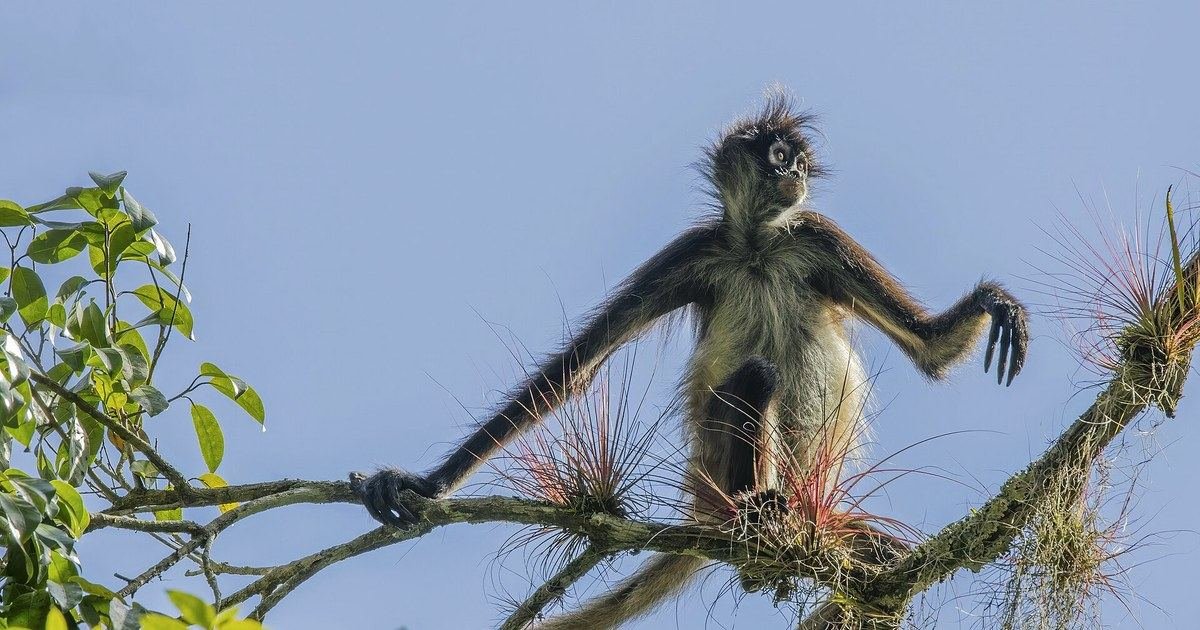
Photo: Charles J. Sharp / Wikimedia Commons · CC BY-SA 4.0
A spider monkey in the wild; a member of this species died at the León zoo. Reference photo: Charles J. Sharp / Wikimedia Commons (CC BY-SA 4.0).
The León Zoo in Guanajuato, Mexico, has closed to the public because of an H5N1 avian influenza outbreak. The closure, requested by the state and federal health departments, began on Wednesday, November 25, and could last at least 21 days, according to El Universal.
Reopening will depend on no new cases appearing and on the authorities’ assessment, the zoo said.
What happened at the zoo
Mexico’s National Service for Agri-Food Health, Safety and Quality (Senasica) confirmed in mid-November that the virus was present in wild migratory birds found dead in the park’s central lake. According to El País, Senasica said those birds were not part of the zoo’s collection.
By Wednesday, 15 animals had died between November 7 and 23: three ostriches, four geese, two wild ducks, a vulture, two antelopes, two margays and a spider monkey, El Universal reported. Necropsy results are still pending to determine whether all of them died from the virus. The zoo houses 1,663 animals of 195 species.
The zoo’s director, Diana Karen Casillas, said the origin is under investigation and that the likely source is migratory birds, which pass through the region between October and March.
The workers: 26 negative tests
The Guanajuato Health Department identified 29 exposed people, 15 of whom had symptoms. The Institute of Epidemiological Diagnosis and Reference (InDRE) reported preliminarily that none of the 26 samples processed tested positive, according to La Jornada. Monitoring of the workers continues.
What is the risk for people?
The WHO explains that flu viruses of animal origin do not spread easily to humans or between people. The main risk comes from direct or indirect contact with infected animals or contaminated environments. In people, infection can range from mild symptoms or conjunctivitis to severe respiratory illness.
- Do not touch sick or dead birds; report them to the authorities.
- Wash your hands after being in contact with animals.
- If you were in contact with sick birds and develop fever, cough or eye irritation, see your doctor and mention that exposure.
Read also: Virus Shamonda: el primer caso humano en Francia · La gripe sube en EE. UU. antes de Acción de Gracias
Sources
- El Universal: Suman 15 animales muertos en zoológico de Guanajuato (26 nov 2026)
- La Jornada: No hay contagios de influenza aviar AH5N1 en el personal del Zoológico de León (25 nov 2026)
- El País: El zoológico de León cierra indefinidamente por un brote de gripe aviar (25 nov 2026)
- OMS: Gripe aviar y otras gripes zoonóticas (nota descriptiva)
For information only. It does not replace advice from a health professional. Medical disclaimer