The Bermuda Triangle: the mystery that captivated the world and what the data say today
Ships that vanish, planes that disappear, compasses gone haywire. For decades, the Bermuda Triangle was a byword for the unexplained. We revisit the most famous cases and why experts believe there's no mystery at all.
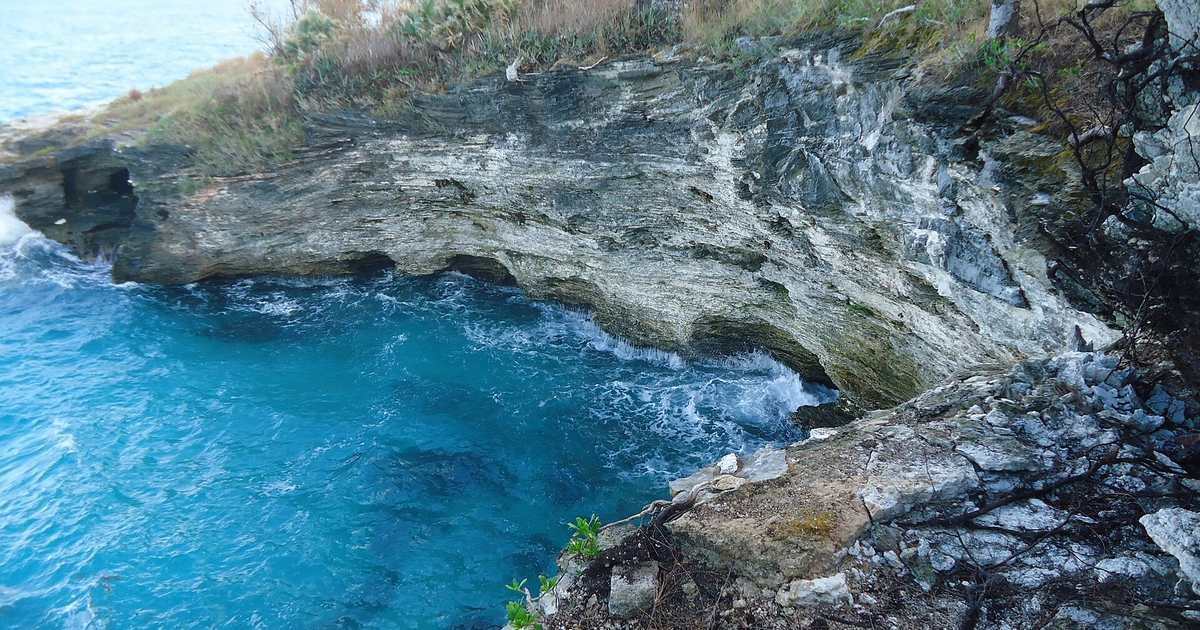
Photo: Wikimedia Commons · CC0
Few modern legends have generated so much talk. Bestselling books, documentaries, movies and now thousands of TikTok videos set to eerie music: the Bermuda Triangle, an area of the Atlantic between Miami, Bermuda and Puerto Rico, is said to "swallow" ships and planes without a trace. How much of it is true?
How the legend began
The phrase "Bermuda Triangle" first appeared in 1964 in an article by writer Vincent Gaddis in a magazine devoted to the paranormal. But the big boost came in 1974 with Charles Berlitz's book The Bermuda Triangle, which sold millions of copies and blamed the disappearances on everything from Atlantis to aliens.
The most famous cases
Flight 19 (1945)
Five US Navy torpedo bombers took off from Fort Lauderdale on a training flight. The flight leader reported that his compasses were failing and that he didn't know where he was. The planes never returned, and a flying boat sent to search for them also disappeared. It's the central story of the myth.
What usually gets left out: the Navy's investigation pointed to the leader's disorientation. He believed he was over the Florida Keys when he was probably over the Bahamas, and he followed a heading that took the planes away from the coast until they ran out of fuel, at night, in bad weather, over rough seas. The rescue plane, a model nicknamed the "flying gas tank" because of problems with fuel vapors, was seen exploding in midair by a passing ship.
USS Cyclops (1918)
A huge US Navy cargo ship vanished with more than 300 people on board. It was overloaded with manganese ore and had a damaged engine. Many experts believe it sank in a storm or because of structural failure; its sister ships were also lost in the North Atlantic during World War II, far from the Triangle.
What the data say
Here's the key point: there's no evidence that more ships and planes disappear in the Triangle than in other equally busy areas. That's the position of the US Coast Guard, the National Oceanic and Atmospheric Administration (NOAA) and the insurer Lloyd's of London, which doesn't charge higher premiums for crossing the area.
In 2017, Australian scientist Karl Kruszelnicki pointed out that the region is one of the busiest in the world, close to the US coast and the Caribbean, and that the rate of incidents is what you'd expect given the amount of traffic.
In 1975, journalist Larry Kusche also went back through the cases in the sensationalist books and found that many were exaggerated, misdated, took place in other oceans or simply never happened.
The natural explanations
- Weather: it's a hurricane zone with sudden, violent storms.
- The Gulf Stream: it's fast and powerful and can carry debris far away quickly.
- Depth: the Puerto Rico Trench is more than 8,000 meters deep, one of the deepest points in the Atlantic; wreckage may be impossible to recover.
- Compasses: in some areas magnetic north and true north nearly line up, which could confuse inexperienced navigators.
- Human error: the large number of recreational boaters with little experience raises the risk.
The most eye-catching theories
Over the years, all kinds of ideas have been proposed: the ruins of Atlantis, portals to other dimensions, UFOs, giant methane bubbles that would make ships lose buoyancy, or "rogue waves". Some of the physical ideas, like extreme waves, do exist in nature and can happen in many oceans, but there's no evidence they explain disappearances in this particular area. The rest have no scientific support.
In 2016 a theory about "hexagonal clouds" creating "air bombs", based on a documentary, also went viral. Meteorologists debunked it: clouds with straight edges are common and don't produce those winds.
Why it still hooks us
The legend combines everything that makes a story irresistible: the vast ocean, disappearances without a trace and the sense that there's something science "doesn't want to tell us". And the myth feeds itself: every new incident in the area is treated as proof, while the thousands of uneventful crossings never make the news.
Today, cruise ships, cargo vessels and commercial flights pass through the Triangle every day without any trouble. The real mystery, perhaps, is why such a thoroughly debunked story remains so popular. The answer is human: we love mysteries, and some are simply too good to let go.
For information only. It does not replace advice from a health professional. Medical disclaimer
You may also like
 Animals
It looks AI-generated, but it's real: the red-lipped batfish of the Galápagos
 Health
Do you always wake up at 3 a.m.? What might be going on and how to get back to sleep
 Viral world
The Panama earthquake video watched by 23 million people: what to do if a quake catches you on a mountain, at home or on the street
 Relationships
The wedding vows that moved 8.8 million people, and what science says about couples who last
 Viral world
From Bulin 47's freestyle to AI montages: 9 clues to tell whether a viral video is real
 Animals