The Nazca Lines: AI has already found hundreds of new figures, but the great mystery remains
A 90-meter hummingbird, a monkey, a spider and hundreds of figures etched into the Peruvian desert some 2,000 years ago. Thanks to drones and artificial intelligence, more geoglyphs have been found than ever. What were they for?
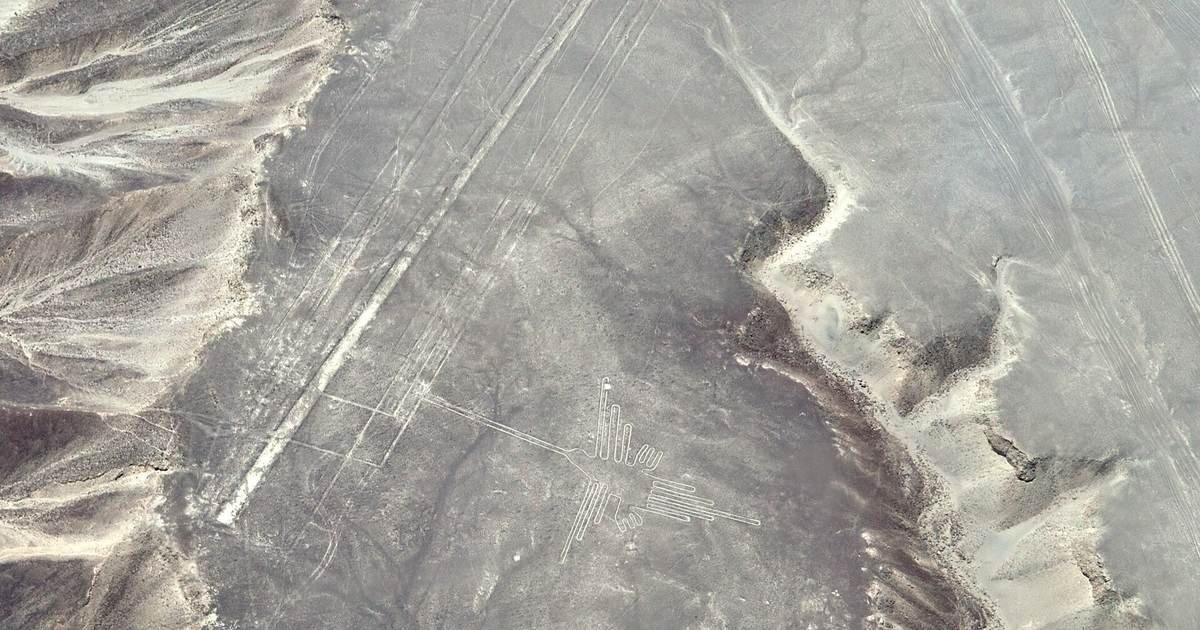
Photo: Unukorno / Wikimedia Commons · CC BY 3.0
From the air, the desert of southern Peru looks like a giant sketchbook. There, between the Ingenio and Grande rivers near the town of Nazca, hundreds of straight lines run for kilometers alongside geometric shapes and figures of animals and plants so large they can only be seen whole from a light aircraft or a hilltop. These are the Nazca Lines, a UNESCO World Heritage Site since 1994 and one of archaeology's great puzzles.
Who made them and how
The most famous figures were created by the Nazca culture, which flourished roughly between 200 BC and AD 600. Some older ones are attributed to the earlier Paracas culture.
The technique was surprisingly simple. The desert floor is covered with reddish stones darkened by oxidation. Removing them reveals lighter ground underneath. Moving the stones aside along a planned path was enough to "draw" on the ground. For the large figures, researchers think the makers used stakes and cords to scale up small sketches. Modern experiments have shown that a small group of people can lay out a large figure in a few days using tools available at the time.
Why have they survived so long? The climate: it's one of the driest places on Earth, with almost no rain and little wind at ground level.
The best-known figures
- The hummingbird, about 90 meters long.
- The monkey, with its spiral tail.
- The spider, around 45 meters.
- The condor, the dog, the hands and the so-called "astronaut", a humanoid figure on a hillside.
The artificial intelligence revolution
For almost a century, the number of known figures grew slowly. In 2024, a team from Yamagata University in Japan, working with IBM, published a study in PNAS that changed the picture: using AI to analyze high-resolution aerial images and then checking the results on the ground, they identified 303 new figurative geoglyphs in just six months, nearly doubling the number known until then.
Many of the new figures are small, about 9 meters on average, and lie next to footpaths. They depict people, domesticated animals such as llamas and, in some cases, scenes that appear to involve sacrifice or decapitated heads. The researchers suggest these smaller figures were meant to be seen by people walking those paths, while the long straight lines and giant figures were linked to community rituals.
What were they for?
That's the million-dollar question, and there's no single accepted answer. The main hypotheses are:
- An astronomical calendar: German researcher Maria Reiche, who devoted her life to studying and protecting the lines, believed many pointed to the rising or setting of the Sun and stars on key dates. Later studies found that only some line up this way, not most.
- Water and fertility: in a desert, water was everything. Some lines seem to relate to underground water sources and channels, and many researchers believe the rituals were prayers for rain.
- Ritual pathways: broken pottery has been found along some lines, suggesting people walked them in processions.
- Messages to the gods: figures so large they could only be "seen" from the sky.
Most likely, their purpose changed over the centuries and combined several of these ideas.
What about aliens?
In the 1970s, writer Erich von Däniken popularized the idea that the lines were landing strips for alien spacecraft. Archaeologists reject it: the ground is soft and couldn't be used to land anything, the techniques used to make the lines are well documented, and the figures resemble motifs found on Nazca pottery and textiles. Crediting beings from another planet, experts point out, takes credit away from the people who actually created them.
A fragile heritage
The lines are vulnerable. In 2014, activists from an environmental group left footprints next to the hummingbird while placing a message, and in 2018 a truck driver damaged several lines by driving into the protected area. They're also threatened by farming expansion, illegal mining and extreme rains linked to El Niño. That's why walking on them isn't allowed: the way to see them is from viewing towers or on authorized flights.
A mystery that keeps growing
Each new technology — satellites, drones, AI — has revealed more figures. Researchers estimate many more are still waiting to be found. We may never know for certain what the Nazca people were thinking when they made them, but every discovery brings us a little closer to a civilization that turned the desert into its canvas.
For information only. It does not replace advice from a health professional. Medical disclaimer
You may also like
 Animals
It looks AI-generated, but it's real: the red-lipped batfish of the Galápagos
 Health
Do you always wake up at 3 a.m.? What might be going on and how to get back to sleep
 Viral world
The Panama earthquake video watched by 23 million people: what to do if a quake catches you on a mountain, at home or on the street
 Relationships
The wedding vows that moved 8.8 million people, and what science says about couples who last
 Viral world
From Bulin 47's freestyle to AI montages: 9 clues to tell whether a viral video is real
 Animals