Do we only use 10% of our brains? 7 myths about the mind that keep going around (and what science says)
From the "10% of the brain" to "right-brained" people to the idea that neurons never regrow. We look at the most widely shared myths and what we actually know.
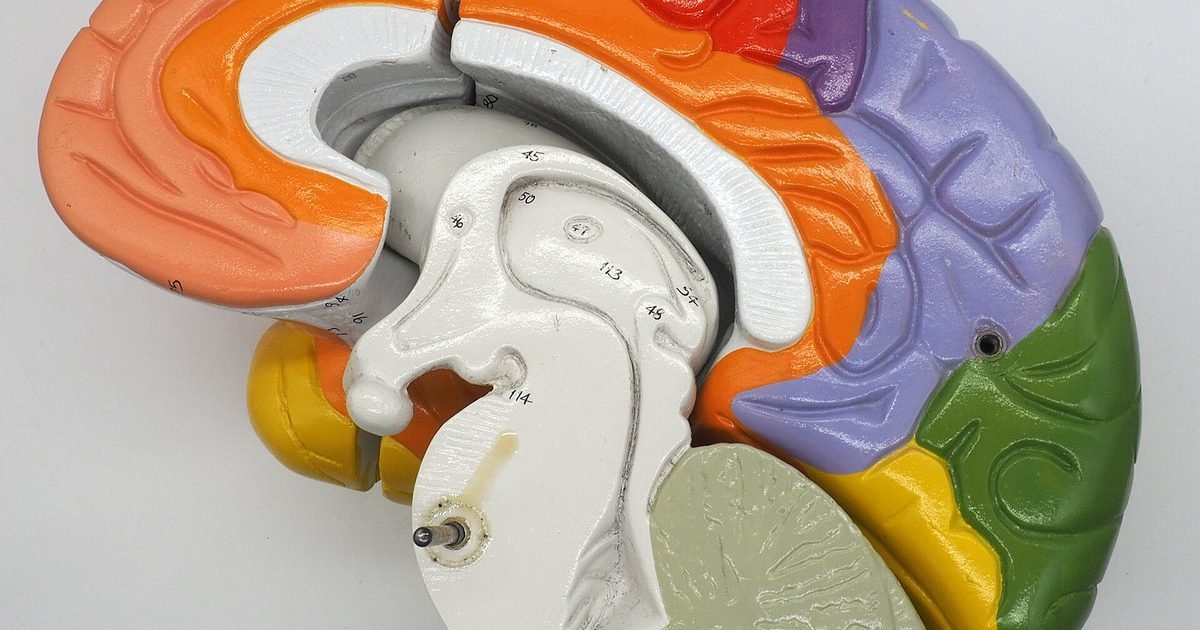
Photo: YVC Biology Department / Wikimedia Commons · CC BY 2.0
They show up in movies, motivational quotes and endlessly forwarded messages. Brain myths have an irresistible appeal: they promise hidden powers or a simple trick to change how our minds work. Some contain a grain of truth; others are pure fantasy. An international survey published in Frontiers in Psychology found that even many teachers believed several of them. Here are seven of the most widespread.
Myth 1: "We only use 10% of our brains"
It's probably the most famous myth, and the most wrong. Imaging techniques such as functional MRI show that over the course of a day virtually every region of the brain becomes active. Not all at once, just as we don't use every muscle at the same time, but no part is "asleep" waiting to be switched on.
The brain is also an extremely expensive organ: it makes up about 2% of body weight but uses roughly 20% of our energy. Evolution would not have kept 90% of it as useless tissue. And damage to almost any area produces some effect, which confirms that every part has a job.
The myth's origin is unclear: it has been wrongly attributed to Albert Einstein and to misreadings of early 20th-century research.
Myth 2: "People are either left-brained or right-brained"
It's true that some functions are concentrated more on one side: in most people, much of language depends on the left hemisphere. But the idea that "logical" people use the left side and "creative" people the right doesn't hold up. A University of Utah study analyzed brain scans from more than a thousand people and found no one who relied predominantly on one hemisphere. Complex tasks, like creativity or math, involve networks spread across the whole brain.
Myth 3: "Neurons never regenerate"
That was the belief for decades. We now know that in some areas, such as the hippocampus (crucial for memory), new neurons can form in adulthood, a process called neurogenesis, although scientists still debate how much it happens in humans. What is clear is that the brain is highly plastic: connections between neurons keep changing with learning, exercise and experience, at any age.
Myth 4: "Listening to Mozart makes you smarter"
The so-called "Mozart effect" came from a 1993 study in which students who listened to a sonata briefly improved on a spatial task. The effect lasted about 15 minutes, and other studies failed to replicate it consistently. Listening to music you enjoy can lift your mood and focus, but it won't raise your IQ. Learning to play an instrument, on the other hand, is associated with benefits across several skills.
Myth 5: "Everyone learns best in their own style: visual, auditory or kinesthetic"
It's a hugely popular idea in education, but scientific reviews have found no evidence that tailoring teaching to a student's preferred "style" improves results. What works for almost everyone is mixing formats (text, images, hands-on practice), spacing out review sessions and testing yourself with questions.
Myth 6: "Alcohol kills brain cells"
This one needs nuance. Moderate drinking doesn't directly "kill" neurons the way people often say, but alcohol does harm the brain: it disrupts connections between neurons, and heavy, long-term drinking is linked to loss of brain volume, memory problems and serious disease. The World Health Organization also points out that there is no level of drinking that is completely safe for health. The myth being imprecise doesn't make alcohol harmless.
Myth 7: "Crossword puzzles prevent dementia"
Keeping your mind active is good, and some studies link intellectual activity with a lower risk of cognitive decline. But there's no single game that protects the brain. The Lancet Commission on dementia estimates that around 45% of cases may be linked to modifiable risk factors, including high blood pressure, untreated hearing loss, smoking, physical inactivity, diabetes, social isolation and high cholesterol. Looking after your heart, staying active, sleeping well and keeping up relationships matter as much as puzzles.
Why we love these myths
They're easy to remember, offer simple explanations and often an appealing promise. And because they sound "scientific", we share them confidently. Real neuroscience is more complicated, but also more fascinating: a 1.4-kilo organ with about 86 billion neurons that changes with everything we learn.
What actually helps your brain
- Sleeping 7 to 9 hours: during sleep the brain consolidates memories and clears out waste.
- Doing regular aerobic exercise.
- Learning challenging new things: a language, an instrument, a dance.
- Keeping an active social life.
- Keeping blood pressure in check and getting your hearing tested.
For information only. It does not replace advice from a health professional. Medical disclaimer
You may also like
 Animals
It looks AI-generated, but it's real: the red-lipped batfish of the Galápagos
 Health
Do you always wake up at 3 a.m.? What might be going on and how to get back to sleep
 Viral world
The Panama earthquake video watched by 23 million people: what to do if a quake catches you on a mountain, at home or on the street
 Relationships
The wedding vows that moved 8.8 million people, and what science says about couples who last
 Viral world
From Bulin 47's freestyle to AI montages: 9 clues to tell whether a viral video is real
 Animals