"Serious" European alert over norovirus in razor clams: nine people sick in Tarragona after eating them undercooked
Spain issued an alert in the EU's RASFF system over norovirus in frozen razor clams. Nine people fell ill after eating them at a restaurant in Tarragona. The product was withdrawn. Why cooking shellfish thoroughly is the best defense.
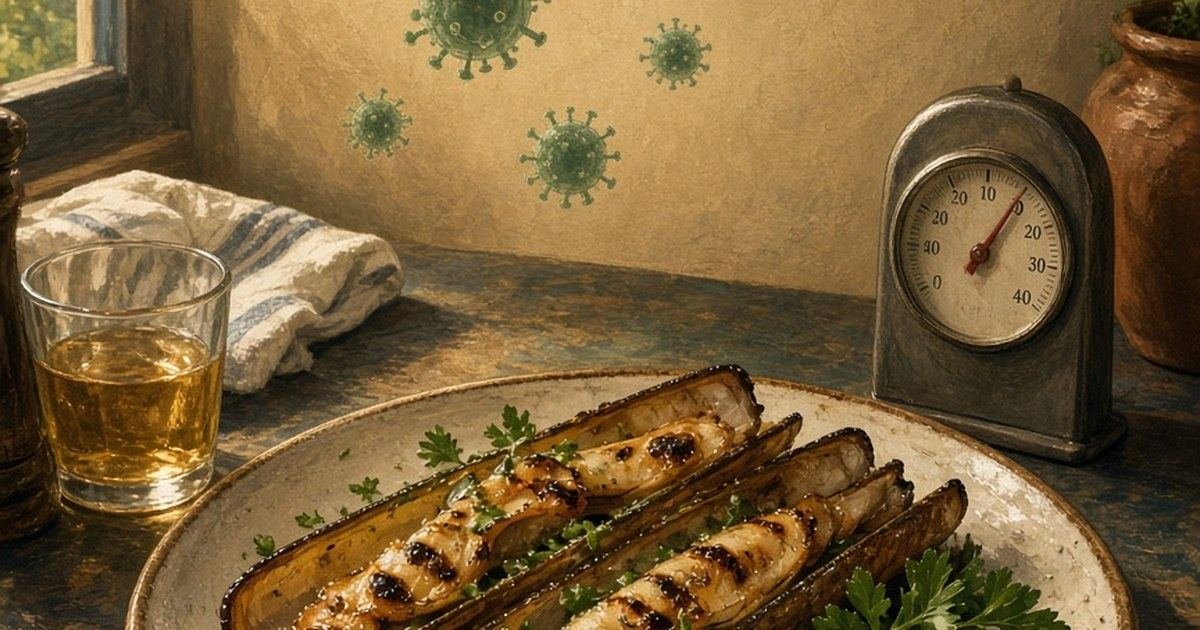
Photo: Salud3 / Imagen ilustrativa generada con IA · Imagen ilustrativa
Illustrative image: Razor clams on a plate. Not the withdrawn product.
Nine people got sick with norovirus after eating undercooked razor clams at a restaurant in Tarragona, Spain, according to El País, RTVE, El Mundo and 20minutos. The outbreak happened in September and led Spain to file, on October 28, an alert in the EU Rapid Alert System for Food and Feed (RASFF), reference 2026.9600, classified as "serious," for norovirus genogroups GI and GII in frozen razor clams.
The product is no longer on the market.
Where the razor clams came from
According to the outlets cited, the razor clams came from Andalusia and Portugal and were processed in the Terres de l'Ebre area. All the affected product was withdrawn. Catalonia records, on average, about 30 norovirus outbreaks a year, according to the published reports.
"Cooking food well is the best prevention," summed up Gema Fernández Rivas of the Spanish Society of Infectious Diseases and Clinical Microbiology (SEIMC), in remarks reported by the press. The virus is tough: according to figures cited in the coverage, it survives 60 °C (140 °F) for 3 minutes and needs about 1 minute at 100 °C (212 °F) to be inactivated.
How norovirus works
The U.S. Centers for Disease Control and Prevention (CDC) describe norovirus as the most common cause of acute gastroenteritis. It is highly contagious: just a few particles can make you sick. Symptoms usually appear 12 to 48 hours after exposure and last 1 to 3 days: vomiting, diarrhea, nausea, stomach pain and sometimes fever, headache or body aches.
Bivalve shellfish such as oysters, mussels, clams and razor clams filter seawater, so they can concentrate viruses if that water is contaminated. That is why eating them raw or undercooked raises the risk.
How to protect yourself
- Cook shellfish thoroughly, especially bivalves. Opening them "for a moment" on the griddle may not be enough.
- Wash your hands with soap and water: the CDC notes that alcohol-based hand sanitizer is not a substitute for handwashing against norovirus.
- Disinfect surfaces with diluted bleach if someone at home has vomited or had diarrhea.
- Don't cook for others while you have symptoms and for at least two days after.
- Stay hydrated with frequent sips. There is no specific antiviral; treatment is replacing fluids.
Seek medical care if you can't keep fluids down, there is blood in the stool, severe dizziness or very little urine, especially in young children, older adults or people with chronic illnesses. If in doubt, talk to your doctor.
Read also: Margaritas preparadas con desengrasante en un Chili's · Turistas intoxicados tras un crucero en Ushuaia
Sources
For information only. It does not replace advice from a health professional. Medical disclaimer