"Ferritin face"? Why you can't spot iron deficiency by looking in the mirror, according to doctors
On TikTok and Instagram, the idea went viral that dark circles, pale skin and brittle hair give away low ferritin. Hematologists and family doctors interviewed by the BBC explain what is true, when to get tested and why you shouldn't take iron on your own.
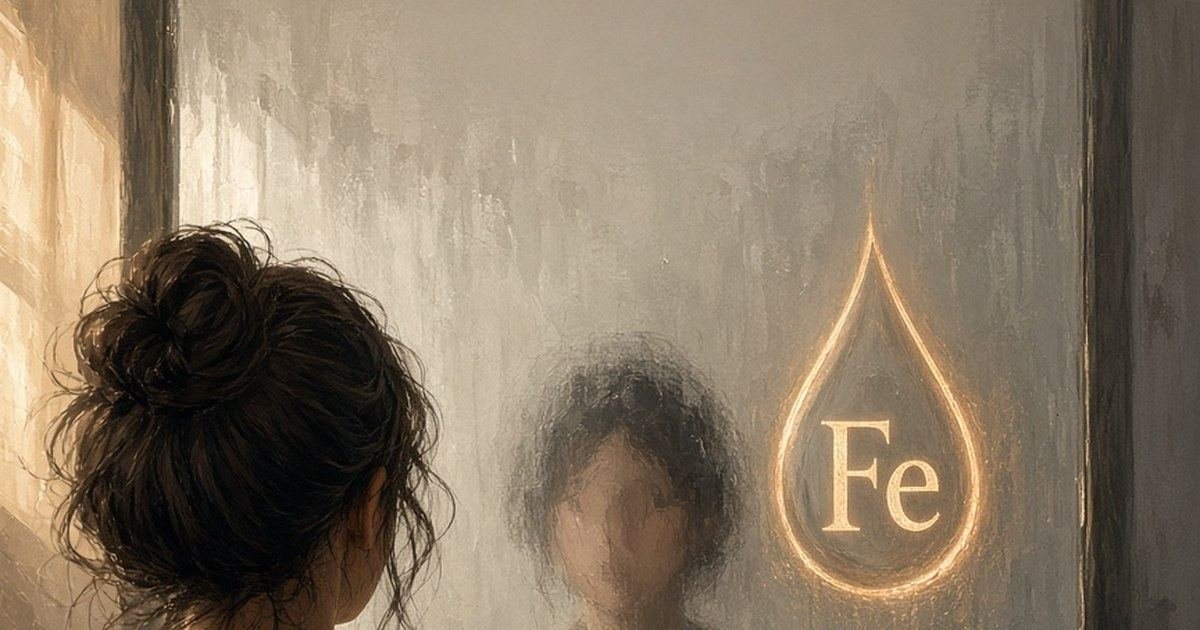
Photo: Salud3 / Imagen ilustrativa generada con IA · Imagen ilustrativa
Illustrative image: A person in front of a fogged mirror and a blood test tube.
"Do you have ferritin face?" a young woman asks on TikTok while pointing to dark circles, pale skin and brittle hair. The phrase "ferritin face" has spread across TikTok and Instagram, with videos racking up millions of views that blame those features on low iron levels, according to a report published on November 2 by BBC Mundo.
Doctors have a clear answer.
What ferritin is and why it matters
Ferritin is a protein that stores iron in the body, and its levels show how your reserves are doing. Hemoglobin, by contrast, is the protein in red blood cells that carries oxygen; when it is low, we talk about anemia. But reserves can run out first: a person can have iron deficiency and symptoms without having anemia.
"You have no iron stores, but you maintain your hemoglobin levels. That's where the big discrepancy lies," hematologist Drew Provan told the BBC. Hematologist Sue Pavord added that iron deficiency is common and often not properly diagnosed in women. According to British Society of Gastroenterology guidelines cited by the BBC, ferritin below 15 micrograms per liter indicates absent iron stores.
What your face can't tell you
"Ferritin face is not a medical diagnosis," said family doctor Aziza Sesay. "However, it can be a sign that something is not right." Paleness, hair loss or brittle nails can go along with low iron, but also with other conditions.
Provan was blunter: it is "impossible" to know someone's ferritin levels by looking at their face. Visual signs are "subjective and unreliable." Sesay added that on darker skin, color changes may be less noticeable, so looking for "the face" from the videos can mean missing the problem.
A British creator, Lucy M., 32, told the BBC that in 2021 she had palpitations, fatigue and hair loss; she was told her tests were normal and was diagnosed with anxiety, until a ferritin test showed low levels. For her, social media has helped many women take their symptoms seriously; Sesay calls it "a double-edged sword."
What to do if you suspect low iron
- Pay attention to how you feel, not just the mirror: persistent tiredness, shortness of breath, palpitations, hair loss or heavy periods are reasons to see a doctor.
- Ask for a blood test: it confirms the deficiency and, above all, helps find the cause (heavy periods, a low-iron diet, digestive blood loss or absorption problems).
- Don't take supplements without a diagnosis: specialists warn it can be harmful and delay finding an underlying problem.
- If they are prescribed, Pavord advises taking them on an empty stomach, ideally early in the day, and avoiding tea or coffee at that time because they hinder absorption.
- In your diet, iron is found in meat, legumes, lentils, leafy green vegetables and fortified cereals.
The World Health Organization considers anemia a public health problem that mainly affects women and young children. If these symptoms sound familiar, talk to your doctor: one blood test is worth more than a thousand videos.
Read also: Leches infantiles falsificadas: cómo reconocerlas
Sources
For information only. It does not replace advice from a health professional. Medical disclaimer