What happens to the air in your home when you light a scented candle? What experts say and how to reduce your exposure
When they burn, candles can release soot, fine particles and volatile organic compounds. Experts say the risk depends on how many candles, for how long, the size of the room and, above all, ventilation.
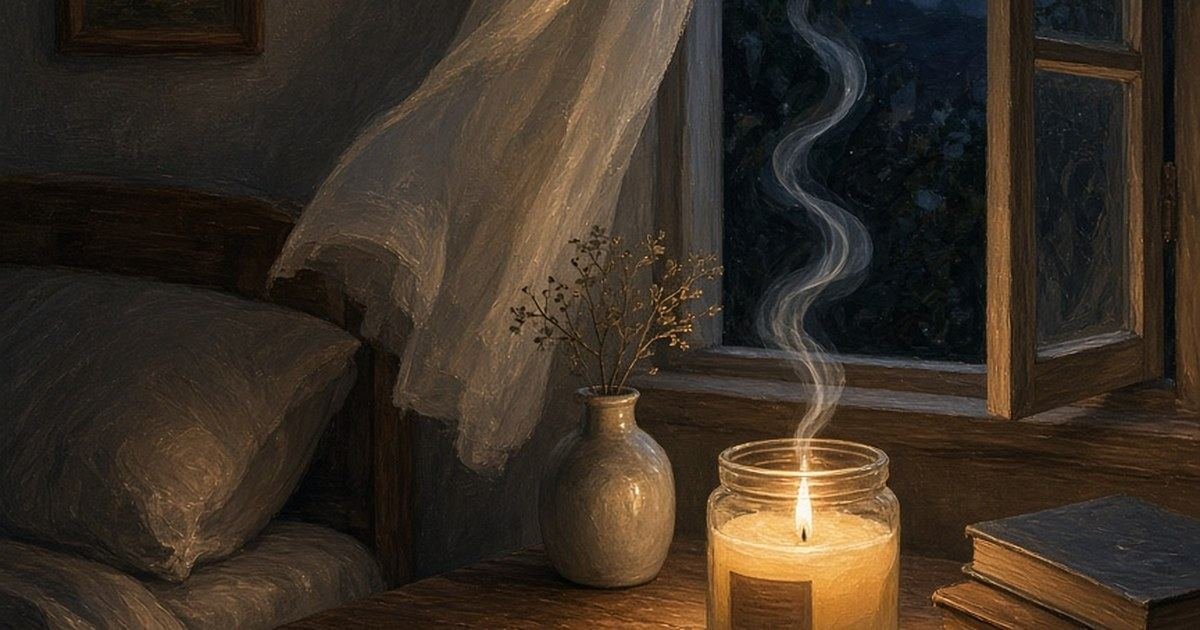
Photo: Salud3 / Imagen ilustrativa generada con IA · Imagen ilustrativa
Illustrative image: A lit scented candle in a jar on a nightstand, next to books and a vase, with a thin wisp of smoke drifting toward an open window with a billowing curtain. It does not depict a real home.
Lighting a scented candle has become a relaxation ritual, but it can also add particles and chemical compounds to the air in your home. That is the takeaway of an Infobae article published on November 4, based on respiratory health experts and World Health Organization (WHO) documents.
The key is not where many people think.
What a burning candle releases
When they burn, candles can emit soot, particulate matter and volatile organic compounds (VOCs). WHO notes that fine particles, especially PM2.5, can penetrate deep into the lungs and enter the bloodstream, and exposure is associated with cardiovascular and respiratory effects. According to Infobae, WHO also lists burning candles and incense among indoor sources of formaldehyde, a compound that can irritate the eyes, nose and throat.
Respiratory toxicologist Meghan E. Rebuli told Good Housekeeping that in tests recreating typical home use, emissions of soot, VOCs and particles were mostly below levels of concern. Still, she said scented and paraffin-based candles can increase certain compounds and particles.
The dose is what matters
Pulmonologist Daniel Croft stressed that the dose determines the risk: what matters is how many candles are lit, for how long, the volume of the room and how often the air is renewed. There is no established threshold for how many candles in an unventilated room cause harm.
For reference, WHO guideline values for PM2.5 are 5 micrograms per cubic meter as an annual average and 15 micrograms over 24 hours. They are not a specific limit for candles, but they help show why indoor combustion matters. The European Commission, cited by Infobae, also warns that data are still lacking on the long-term effects of many chemicals found in indoor air.
Nikaeta Sadekar, a scientist at the Research Institute for Fragrance Materials, said that by its estimates exposure to fragrance compounds is low; Infobae notes that the institute studies fragrance materials and that its assessment should be read alongside that of independent health bodies.
How to enjoy them with less exposure
- Ventilate: Croft identifies ventilation as the central factor. Opening a window, when possible and safe, helps renew the air.
- Moderate: fewer candles for less time, especially in small rooms or rooms with poor air circulation.
- Extra care with asthma or allergies: people with greater respiratory sensitivity may need more precautions around household combustion sources.
The available evidence does not show that typical home use is a defined risk for the whole population, but it does show that combustion changes indoor air. If you have asthma, a respiratory condition or notice irritation when using candles, talk to your doctor.
Read also: Alerta roja por calor de hasta 38 °C y radiación UV en Perú: cómo protegerte · ¿Usas audífonos todo el día? Cuánto volumen y cuántas horas dañan el oído
Sources
For information only. It does not replace advice from a health professional. Medical disclaimer