Chiapas: a girl dies and five people remain hospitalized after eating a wild mushroom broth. Why there is no home test to tell if mushrooms are safe
The mushrooms were picked by children in the community of Shanaten, in Larráinzar, and cooked in a broth on October 26. The Chiapas Health Department urges people not to eat wild mushrooms unless they are certain of the species.
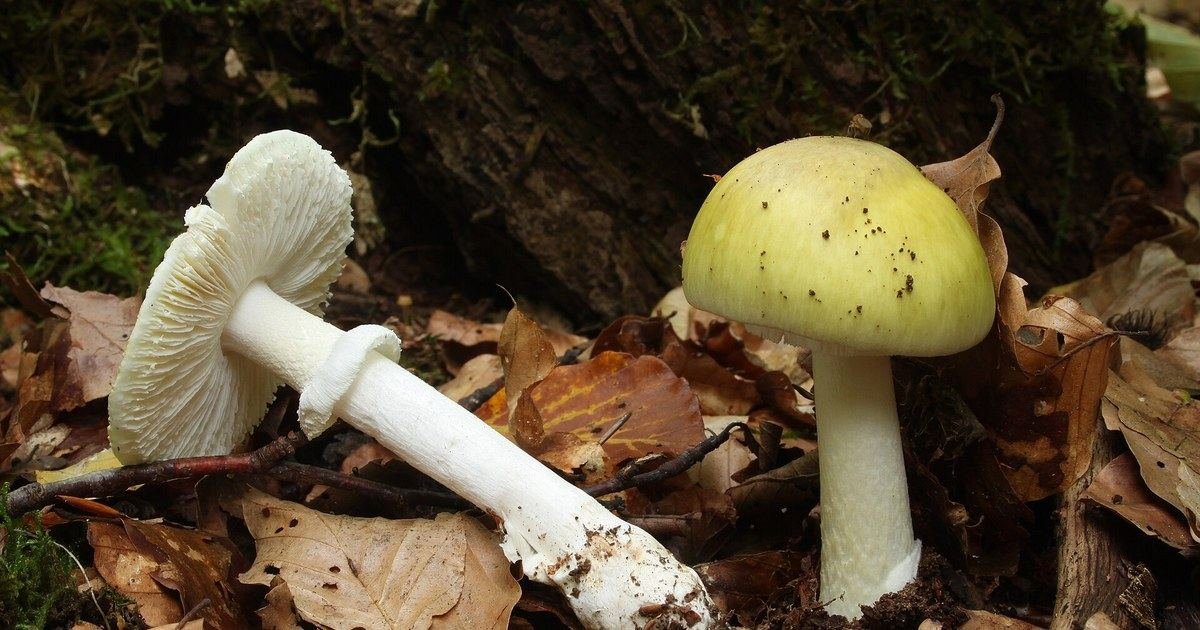
Photo: Holger Krisp / Wikimedia Commons · CC BY 3.0
Amanita phalloides, one of the most toxic wild mushrooms (the species in this case has not been reported). Reference photo: Holger Krisp / Wikimedia Commons (CC BY 3.0).
A girl died from poisoning linked to eating wild mushrooms in the community of Shanaten, in the municipality of Larráinzar, in the Chiapas highlands, the state Health Department reported. Five other people remained in hospital: four in stable condition and one in serious condition. Another has already been discharged, according to UnoTV and El Heraldo de México.
It all started with a homemade broth.
According to the first official information, the mushrooms were picked by children and cooked in a broth on October 26. The next day, those who ate it began to suffer nausea and vomiting.
Two days before reaching the hospital
The Health Department said those affected first went to a private pharmacy, where they were advised on medicines. The first patient was not admitted until October 29 to the IMSS-Bienestar Basic Community Hospital in Larráinzar, and was then transferred to the Hospital de Las Culturas in San Cristóbal de Las Casas, where she died hours later despite treatment.
Two patients remain at the Larráinzar hospital and three at the Hospital de Las Culturas. Epidemiology, Health Emergencies and Toxicology staff visited the community to collect samples and identify the species. So far, official information has not identified the mushroom or attributed the death to a specific toxin.
Why it is so dangerous
The Merck Manual explains that some species, such as those of the genus Amanita, contain toxins that damage the liver and kidneys. In those cases, digestive symptoms—abdominal pain, nausea, vomiting and diarrhea—usually appear 6 to 12 hours after eating, and sometimes there is an apparent improvement before organ damage sets in. That is why feeling a little better does not mean the danger has passed.
Experts stress that there is no reliable home test: not the color, the smell, the idea that “animals eat them”, cooking or boiling them, or adding garlic or a silver spoon can tell you whether a mushroom is poisonous. Some deadly species look very much like edible ones.
What the authorities recommend
- Do not eat mushrooms picked in the wild unless you are completely sure of the species.
- If anyone has nausea, vomiting, abdominal pain or feels unwell after eating them, go to the nearest medical facility right away, even if the symptoms seem mild.
- If possible, bring a sample or a photo of the mushrooms and say what time they were eaten.
- Do not wait for it to pass or rely only on pharmacy remedies: with this kind of poisoning, every hour counts.
If in doubt, talk to your doctor or your local health services. The Chiapas Health Department continues its epidemiological surveillance; we will update this story if the species is identified.
Read also: 15 turistas llegaron a Ezeiza con síntomas de intoxicación · ¿Cuándo hay que parar con una intoxicación alimentaria?
Sources
For information only. It does not replace advice from a health professional. Medical disclaimer